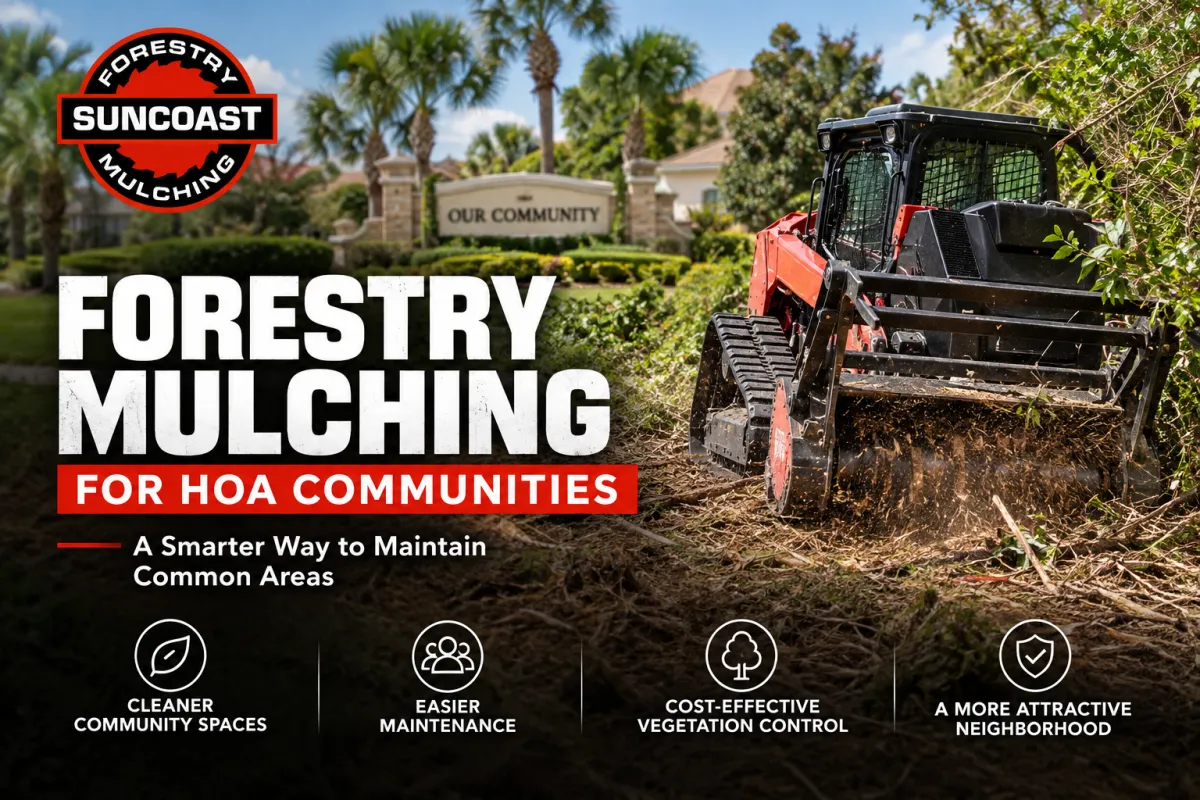
Forestry Mulching for HOA Communities: A Smarter Way to Maintain Common Areas
Forestry Mulching for HOA Communities: A Smarter Way to Maintain Common Areas
Homeowners associations (HOAs) have a lot to manage. From maintaining common areas and entrances to keeping walking paths, drainage areas, and vacant lots looking clean, property maintenance can quickly become a major responsibility.
For HOA communities in Florida, overgrown vegetation can be an especially challenging problem. Florida's warm climate, frequent rainfall, and long growing season allow grass, brush, vines, palmettos, and small trees to grow quickly.
Forestry mulching is an efficient and cost-effective solution for HOAs looking to control overgrowth, improve the appearance of community spaces, and keep properties easier to maintain.
Instead of hauling large amounts of vegetation away, forestry mulching grinds trees, brush, and other unwanted vegetation directly into mulch, leaving the material on the ground to help protect and improve the soil.
What Is Forestry Mulching?
Forestry mulching is a land-clearing and vegetation-management process that uses specialized equipment to cut and grind unwanted vegetation into small pieces.
A forestry mulcher can typically handle:
Overgrown brush
Small trees and saplings
Palmettos
Vines and dense vegetation
Thick undergrowth
Unwanted vegetation along property boundaries
Overgrown vacant lots
Areas around ponds and drainage areas
The resulting mulch is spread across the cleared area, creating a cleaner appearance while helping reduce exposed soil.
For HOA communities, this can be particularly useful because many common areas require regular vegetation management without the need for complete traditional land clearing.
Why Forestry Mulching Is a Good Option for HOAs
HOAs are responsible for maintaining shared community spaces while keeping maintenance costs under control. Forestry mulching can provide several advantages compared with traditional clearing methods.
1. Improves the Appearance of Common Areas
Overgrown vegetation can make an otherwise well-maintained neighborhood look neglected.
Forestry mulching can quickly transform areas covered with thick brush, weeds, vines, and unwanted trees into cleaner, more manageable spaces.
This can be useful for:
Community entrances
Common areas
Vacant lots
Green spaces
Property borders
Walking paths
Areas surrounding amenities
Retention ponds and drainage areas
A cleaner landscape can contribute to a more attractive and welcoming appearance throughout the community.
2. Helps Control Overgrown Vegetation
Florida vegetation can grow rapidly, especially during the warmer months. If brush and small trees are left unmanaged, they can quickly become difficult and expensive to clear.
Regular forestry mulching can help HOAs stay ahead of vegetation growth rather than waiting until an area becomes severely overgrown.
Instead of allowing vegetation to become a major maintenance problem, HOA boards can incorporate vegetation management into their property's regular maintenance strategy.
3. Reduces the Need for Debris Hauling
Traditional land clearing often involves cutting vegetation, gathering it into piles, loading it onto trucks, and hauling it away.
Forestry mulching works differently.
The vegetation is processed on-site and converted into mulch. Because much of the material remains where it was processed, there may be significantly less debris to haul away.
This can help simplify the clearing process and potentially reduce cleanup and disposal requirements.
4. Helps Prepare Areas for Future Landscaping
HOAs may need to clear areas before installing new landscaping, improving common spaces, expanding walking paths, or carrying out other property improvements.
Forestry mulching can help prepare overgrown areas for the next stage of a project.
Once unwanted vegetation has been removed and mulched, the property can be easier to inspect, grade, landscape, or maintain depending on the project's requirements.
5. Can Help Reduce Erosion and Exposed Soil
One advantage of leaving the processed vegetation on-site is that the mulch can provide a layer of organic material over the soil.
This layer can help reduce direct exposure of soil to rain and runoff while also contributing organic material back into the ground as it decomposes.
However, forestry mulching is not a substitute for engineered erosion-control measures when a property has significant drainage or erosion issues. HOA boards should evaluate those conditions separately when necessary.
Common HOA Areas That Can Benefit From Forestry Mulching
Forestry mulching can be used in many different areas throughout a community.
Community Entrances
The entrance is often the first thing residents and visitors see. Overgrown vegetation around entrance signs, landscaping, or perimeter areas can make a community look poorly maintained.
Selective forestry mulching can help keep these areas open, visible, and easier to maintain.
Vacant Lots and Undeveloped Areas
Vacant property can quickly become covered in brush and unwanted vegetation.
Rather than allowing these areas to become increasingly difficult to manage, HOA boards can schedule periodic vegetation clearing to keep growth under control.
Walking Paths and Trails
Vegetation growing into walking paths can make trails narrower and less inviting.
Forestry mulching can help clear unwanted vegetation along designated areas, creating more usable space and improving visibility.
Retention Ponds and Drainage Areas
Many Florida communities have retention ponds, drainage corridors, and other areas that require ongoing vegetation management.
Forestry mulching may be appropriate for selected areas around these features, depending on site conditions, access, environmental considerations, and local requirements.
Community Perimeters
Trees, brush, and vines can grow along fences and property boundaries, making routine maintenance more difficult.
Mulching unwanted vegetation along designated perimeter areas can help create cleaner, more accessible boundaries.
How Often Should an HOA Schedule Forestry Mulching?
There is no single schedule that works for every HOA.
The ideal frequency depends on factors such as:
Amount and type of vegetation
Property size
Growth rate
Weather conditions
Previous maintenance
Desired appearance
Intended use of the property
Accessibility
HOA maintenance budget
Some properties may benefit from periodic maintenance, while heavily overgrown areas may first require a more extensive clearing project.
A professional site assessment can help determine the most appropriate approach.
Is Forestry Mulching Environmentally Friendly?
Forestry mulching can be a more efficient vegetation-management method because it processes much of the vegetation on-site instead of requiring everything to be removed and transported.
The mulch left behind can also provide organic material to the soil and help cover exposed ground.
However, responsible land management is important.
Before any forestry mulching project, property owners and HOA boards should consider:
Protected trees
Wetlands
Wildlife habitat
Drainage features
Utility lines
Property boundaries
Local regulations
HOA rules and restrictions
Not every area should be cleared. A professional contractor should evaluate the site and identify areas that should remain protected.
What HOA Boards Should Consider Before Hiring a Forestry Mulching Contractor
Choosing the right contractor is important when maintaining shared community property.
Before scheduling work, HOA boards should consider:
Experience
Look for a contractor with experience handling vegetation management and land-clearing projects similar to the HOA's needs.
Equipment
Forestry mulching requires specialized equipment designed to efficiently process heavy vegetation.
Insurance
Make sure the contractor carries appropriate insurance coverage for the work being performed.
Clear Scope of Work
The HOA and contractor should agree on exactly what areas will be cleared, what vegetation will be removed, and what areas should remain untouched.
Property Access
Large forestry equipment needs sufficient access to reach the work area. Discuss access points, gates, roads, and any potential obstacles before work begins.
Site Conditions
Drainage areas, slopes, wetlands, utilities, and other site conditions should be considered before clearing begins.