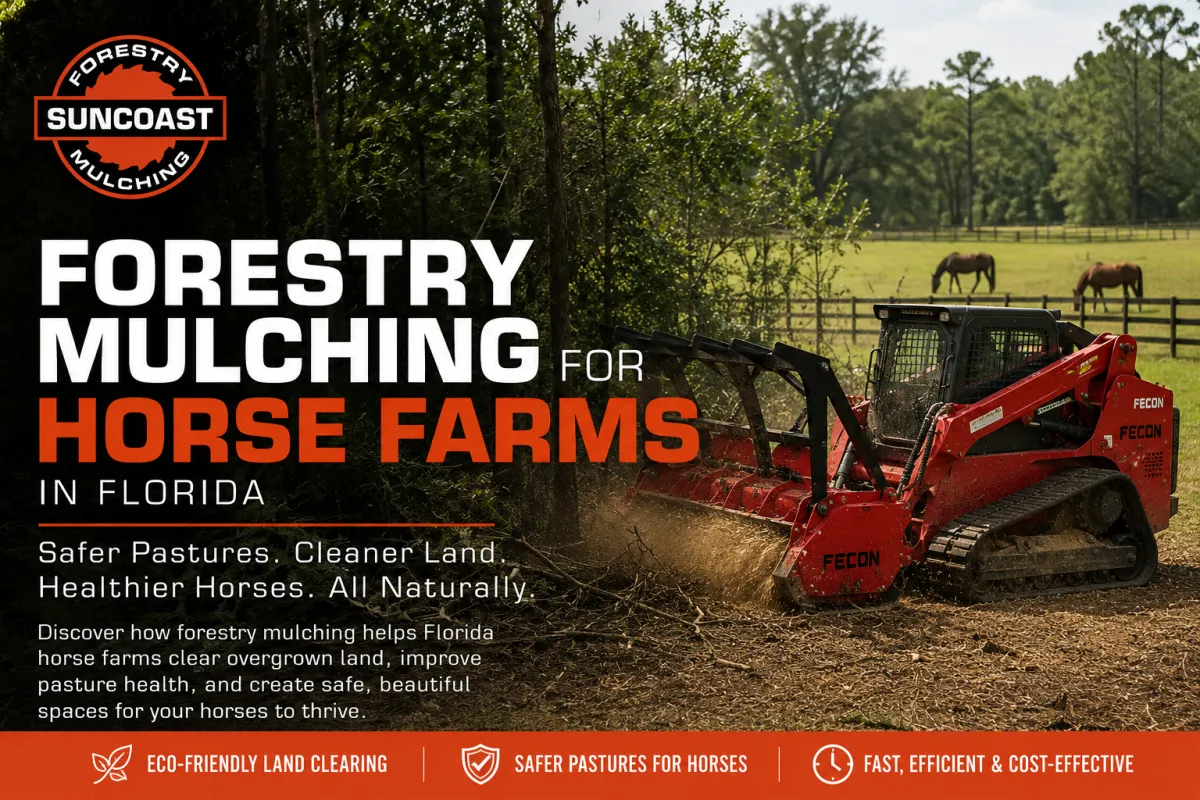
Forestry Mulching for Horse Farms in Florida
Forestry Mulching for Horse Farms in Florida
Horse farms need more than open pasture. They need land that is safe, accessible, manageable, and healthy for horses. In Florida, maintaining that kind of property can be challenging because warm weather, frequent rain, fast-growing vegetation, vines, palmettos, and invasive brush can quickly take over unused areas.
Forestry mulching for horse farms in Florida is an efficient way to reclaim overgrown areas, improve pasture conditions, and create cleaner, more usable land without relying on traditional clearing methods.
At Suncoast Forestry Mulching, we help Florida property owners clear unwanted vegetation and turn difficult, overgrown areas into functional spaces that are easier to maintain.
Why Horse Farms in Florida Need Regular Land Maintenance
Florida's climate creates excellent growing conditions for vegetation. While that can be beneficial for pastures and landscaping, it also means unwanted growth can become a problem quickly.
Overgrown horse-farm properties may develop:
Thick brush and undergrowth
Small trees and unwanted saplings
Palmettos and vines
Overgrown fence lines
Dense vegetation around pastures
Fallen branches and woody debris
Difficult-to-access areas
Overgrown trails and service roads
If these areas are left unmanaged, they can reduce usable space and make routine property maintenance more difficult.
For horse owners, vegetation management is also important because pasture and surrounding areas need to be kept as safe and accessible as possible.
What Is Forestry Mulching?
Forestry mulching is a land-clearing method that uses specialized equipment to cut, grind, and mulch vegetation directly where it grows.
Instead of cutting vegetation and leaving piles of brush behind, a forestry mulcher processes much of the material into small organic mulch that is distributed across the ground.
This makes forestry mulching particularly useful for horse farms because it can clear unwanted vegetation while minimizing the need for hauling and burning large piles of debris.
The result is a cleaner, more manageable property that can be prepared for future use or maintenance.
How Forestry Mulching Benefits Horse Farms
1. Creates Safer Areas Around the Property
Horse farms require careful attention to fencing, gates, trails, and pasture boundaries.
Overgrown vegetation can make fence lines difficult to inspect and maintain. Brush and small trees can also grow into or around fencing.
Forestry mulching can help clear vegetation along selected fence lines, access areas, and property boundaries, making these areas easier to see, inspect, and maintain.
Important: Forestry mulching should be performed carefully around existing fences, gates, barns, water lines, utilities, and other structures.
2. Reclaims Overgrown Land
Horse farms often have sections of property that are no longer being used because they have become too thick with vegetation.
Instead of allowing those areas to remain inaccessible, forestry mulching can help reclaim portions of the land.
Depending on the property and vegetation, cleared areas may be suitable for:
Pasture expansion
Horse trails
Access roads
Equipment access
Additional fencing
Future agricultural use
General property improvement
A professional site assessment can help determine the best approach for each area.
3. Improves Property Accessibility
Dense brush can make it difficult for owners, workers, trailers, and equipment to move around a horse farm.
Forestry mulching can help open up access paths and overgrown areas, making it easier to reach different parts of the property.
This can be especially useful for large farms where regular maintenance requires access to remote sections of the land.
4. Helps Manage Overgrown Fence Lines
Fence maintenance is an important part of managing a horse property.
When vegetation grows heavily along fence lines, it can hide damaged sections, interfere with inspections, and make repairs more difficult.
Strategic vegetation clearing can help keep fence lines more visible and accessible.
This does not mean every fence line should automatically be mulched. A professional operator should evaluate the fencing and surrounding conditions before beginning work.
5. Reduces Brush and Woody Debris
Traditional land clearing can leave behind large piles of branches, brush, and other debris that still need to be removed.
Forestry mulching processes much of the vegetation during the clearing operation itself.
This can reduce the amount of loose debris left across the property and provide a cleaner finished appearance.
6. Helps Prepare Land for Future Improvements
Maybe you want to expand a pasture, create a new trail, improve access, or make better use of an unused portion of your property.
Forestry mulching can be an effective first step in preparing land for a future project.
Once unwanted vegetation has been cleared, the property owner can determine what additional work may be needed, such as grading, drainage improvements, soil preparation, seeding, or fencing.
Forestry Mulching vs. Traditional Land Clearing for Horse Farms
Traditional clearing and forestry mulching are not the same process.
Traditional land clearing may involve cutting vegetation, stacking debris, hauling material away, and potentially burning or disposing of the debris.
Forestry mulching combines cutting and processing into one operation.
Forestry Mulching
Cuts and grinds vegetation in place
Produces mulch from cleared vegetation
Can reduce debris piles
Requires fewer hauling operations
Can be useful for selective vegetation management
Often leaves the property looking cleaner after clearing
Traditional Clearing
May involve larger amounts of debris
Can require hauling and disposal
May require additional cleanup
Can involve multiple pieces of heavy equipment
May be better suited for certain large-scale development or grading projects
The right method depends on the property, vegetation, terrain, desired end result, and future use of the land.
Is Forestry Mulching Safe for Horse Farms?
Forestry mulching can be an excellent vegetation-management option for horse properties, but safety and planning are essential.
Before work begins, horse owners should identify areas that need special attention, including:
Horses and livestock
Fences and gates
Barns and shelters
Water troughs and irrigation
Electrical lines
Underground utilities
Septic systems
Wells
Drainage areas
Pasture areas
Valuable trees or landscaping
Horses and other animals should be kept away from active equipment and the work area during clearing.
A professional forestry mulching contractor should also evaluate the terrain and vegetation before starting the project.
Can Forestry Mulching Help Create Horse Trails?
Yes. Forestry mulching can be useful when creating or reopening trails through overgrown areas.
Horse trails can become difficult to use when brush, vines, and small trees take over.
By selectively clearing vegetation, property owners can create more accessible routes through wooded or overgrown sections of a farm.
However, trail construction requires more than simply removing vegetation. The final trail should be evaluated for:
Width
Terrain
Drainage
Soil conditions
Slopes
Tree roots
Water runoff
Horse safety
Long-term maintenance
Forestry mulching can handle the vegetation-clearing portion of the project, while additional grading or drainage work may be appropriate depending on the site.
What Areas of a Horse Farm Can Be Mulched?
Every property is different, but forestry mulching may be useful for several areas of a horse farm.
Pasture Edges
Overgrown vegetation around pasture boundaries can gradually reduce usable space. Selective clearing can help maintain cleaner pasture edges.
Fence Lines
Vegetation around fences can be cleared to improve visibility and accessibility for maintenance.
Trails
Old or overgrown trails can potentially be reopened by removing brush and small woody vegetation.
Wooded Areas
Selective clearing can help reclaim portions of wooded property for specific uses.
Access Roads
Overgrown access routes can be cleared to improve movement around the property.
Unused Areas
Sections of a horse farm that have become overgrown can potentially be reclaimed for future use.
Florida Horse Farms Face Unique Vegetation Challenges
Florida's warm, humid climate allows vegetation to grow rapidly for much of the year.
Depending on the location and property conditions, horse farms may encounter thick brush, vines, palmettos, invasive vegetation, and fast-growing woody plants.
Heavy rainfall can also contribute to rapid regrowth.
That is why vegetation management is not always a one-time project. Property owners may need periodic maintenance to keep cleared areas under control.
A well-planned forestry mulching project can help establish a cleaner starting point for ongoing property maintenance.
When Is the Best Time to Mulch a Horse Farm in Florida?
Forestry mulching can generally be performed throughout much of the year in Florida, but the ideal timing depends on the property's conditions and the type of vegetation being cleared.
Many property owners choose to schedule clearing during periods when the ground is firm enough to support equipment and when weather conditions allow efficient work.
Before scheduling a project, it is important to consider:
Recent rainfall
Soil conditions
Vegetation density
Accessibility
Planned pasture use
Wildlife considerations
Upcoming construction or fencing projects
A professional contractor can evaluate the site and recommend an appropriate time to complete the work.
How Much Does Forestry Mulching Cost for a Horse Farm?
The cost of forestry mulching varies from property to property.
There is no single price that applies to every horse farm because several factors affect the amount of work required.
These can include:
Size of the area
Density of vegetation
Size of trees and brush
Terrain
Accessibility
Amount of clearing required
Desired finished condition
Presence of fences or structures
Travel and mobilization requirements
The best way to determine the cost is to have the property evaluated and receive a project-specific estimate.