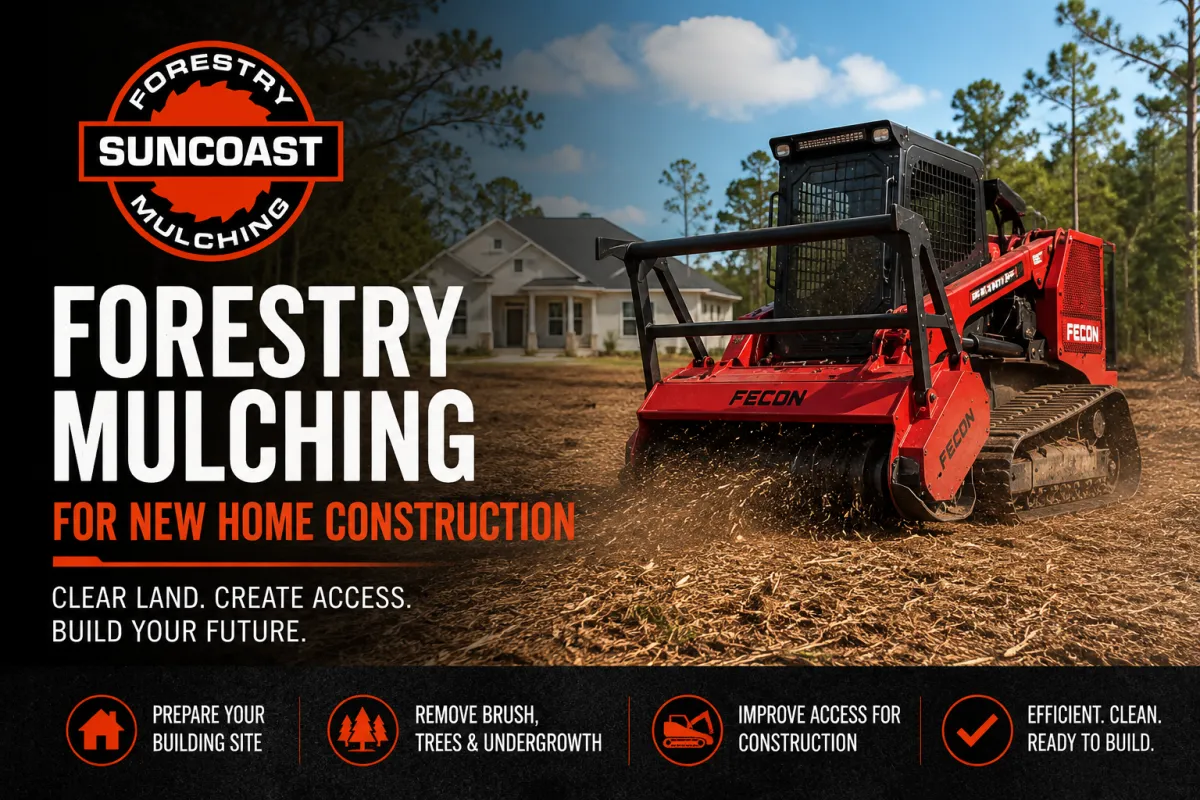
Forestry Mulching for New Home Construction
Forestry Mulching for New Home Construction: Prepare Your Property for Building
Building a new home starts long before the foundation is poured. If your property is covered with overgrown vegetation, small trees, brush, vines, or unwanted growth, the first step is creating a clean, accessible site for construction.
Forestry mulching for new home construction is an efficient way to clear unwanted vegetation while leaving the ground more manageable for the next stage of your project. Instead of hauling every tree and pile of brush away, forestry mulching uses specialized equipment to cut and mulch vegetation directly back into the soil.
For homeowners and property owners in Florida, this can be an effective solution for preparing residential lots while improving access and visibility across the property.
What Is Forestry Mulching?
Forestry mulching is a land-clearing method that uses a specialized mulching machine to cut trees, brush, vines, and other unwanted vegetation into small pieces.
Rather than cutting vegetation and leaving large piles of debris behind, the material is processed on-site and distributed across the cleared area.
This makes forestry mulching particularly useful for properties where the goal is to:
Prepare a residential lot for new construction
Remove overgrown brush and vegetation
Clear access for construction equipment
Create a building site
Improve visibility around the property
Remove unwanted small trees and undergrowth
Clear future driveway or access areas
Reclaim neglected portions of a property
The exact clearing method depends on the size of the trees, terrain, vegetation, property conditions, and construction plans.
Why Forestry Mulching Is Useful for New Home Construction
When preparing a property for a new home, clearing the land is an important early step.
Overgrown vegetation can make it difficult for contractors, surveyors, excavators, and other professionals to access the property. Dense brush can also make it harder to see the terrain and determine how the property should be developed.
Forestry mulching can help create a more accessible and manageable property before construction begins.
1. Creates a Clearer Building Area
Before construction can begin, the home site needs to be accessible and free of unwanted vegetation.
Forestry mulching can remove brush, vines, small trees, and other growth from designated areas so contractors can work more efficiently.
A cleared area can make it easier to plan where the house, driveway, utilities, and other features will be located.
2. Improves Access for Construction Equipment
Construction equipment needs room to enter and move around the property.
If a lot is surrounded by dense vegetation, access can become difficult.
Clearing vegetation from planned access routes can help create pathways for equipment such as excavators, skid steers, delivery vehicles, and other machinery.
This can be especially helpful when developing previously undeveloped or heavily overgrown residential property.
3. Reduces Large Debris Piles
Traditional land clearing may involve cutting vegetation, creating piles, and hauling debris away.
Forestry mulching takes a different approach.
The vegetation is processed on-site, reducing the need for large brush piles throughout the property. The resulting mulch is spread over the cleared area, creating a cleaner site immediately after the vegetation has been processed.
Depending on the project, this can simplify the cleanup process and reduce the amount of loose vegetation that needs to be handled separately.
4. Helps Reclaim Overgrown Residential Lots
Not every new home is built on a recently cleared lot.
Some properties have been vacant for years and may have become heavily overgrown.
You may find:
Thick brush
Small trees
Palmettos
Vines
Dense undergrowth
Fallen vegetation
Overgrown access areas
Forestry mulching can help transform an unmanaged property into a more accessible space that is ready for the next phase of development.
5. Can Help Prepare Driveway and Access Areas
A new home needs more than just a building site.
You may also need areas cleared for:
Driveways
Construction entrances
Utility access
Drainage areas
Parking
Walkways
Outdoor structures
Forestry mulching can be used strategically to clear vegetation from these areas according to the property's development plans.
Does Forestry Mulching Remove Stumps?
This is an important question for homeowners preparing to build.
Forestry mulching does not necessarily mean that every stump and root system is completely removed.
A mulching machine can process trees and vegetation close to the ground, but the requirements for a building site are different from simply removing overgrown vegetation.
For example, your construction project may require:
Stump removal
Root removal
Excavation
Grading
Soil preparation
Debris removal
Drainage work
Your builder, site contractor, or engineer can determine what level of site preparation is necessary before construction.
Forestry mulching can often serve as an effective first step in the land-clearing process, followed by additional site preparation when required.
When Should You Clear Land Before Building a Home?
Land clearing should generally be planned early in the construction process.
Before work begins, it is important to understand the property's development requirements and determine exactly which areas need to be cleared.
Your project may involve:
Property survey
Site planning
Permitting and approvals
Vegetation and land clearing
Driveway and access preparation
Grading and drainage
Foundation preparation
Home construction
The exact sequence can vary depending on the property and local requirements.
Planning the clearing work before construction equipment arrives can help prevent unnecessary delays.
What Areas Should Be Cleared for a New Home?
The building footprint is usually only one part of the property that may need clearing.
Depending on your construction plans, you may need to clear areas for:
Home Building Site
The primary area where the home will be constructed should be accessible and properly prepared for subsequent site work.
Driveway
The driveway may require a cleared path from the road to the future home.
Construction Access
Temporary access may be needed for heavy equipment, material deliveries, and contractors.
Utilities
Areas may need to be cleared for utility installation, depending on the property's layout and plans.
Drainage
Some properties require drainage improvements or designated drainage areas as part of site development.
Additional Structures
You may also need space for garages, workshops, sheds, pools, fences, or other planned improvements.
A professional land-clearing contractor can help determine which vegetation should be removed based on your site plan.
Is Forestry Mulching Environmentally Friendly?
Forestry mulching can be a more efficient vegetation-management method because the vegetation is processed on-site rather than necessarily being transported away.
Instead of leaving large piles of brush, the material is reduced into mulch and distributed across the cleared area.
The mulch can help cover exposed soil and return organic material to the property.
However, forestry mulching is not automatically appropriate for every part of a property. Wetlands, protected areas, waterways, mature trees, wildlife habitat, and other environmentally sensitive areas may require special consideration.
Before clearing your property, make sure you understand any applicable local requirements, permits, and property restrictions.
How Much Does Forestry Mulching Cost for New Home Construction?
The cost of forestry mulching varies from property to property.
Several factors can affect the total price, including:
Acreage
Density of vegetation
Tree size
Type of vegetation
Terrain
Accessibility
Amount of clearing required
Location of the building site
Number of areas that need to be cleared
Whether additional land preparation is needed
A heavily overgrown one-acre property may require significantly different work than a lightly wooded five-acre property.
The best way to understand the cost of your project is to have the property evaluated and receive a project-specific estimate.
How to Prepare Your Property for Forestry Mulching
Before the contractor arrives, there are several things you can do to make the process easier.
Mark Property Boundaries
Clearly identifying your property boundaries can help prevent accidental clearing outside the intended area.
Identify Trees You Want to Keep
If there are mature trees or specific vegetation that you want to preserve, communicate this before work begins.
Provide Your Site Plan
If you already have architectural plans, a survey, or a proposed site plan, share the relevant information with your clearing contractor.
Identify Utilities
Make sure known underground and overhead utilities are identified before clearing begins.
Discuss Your Construction Timeline
Let the contractor know when your builder or other construction professionals expect to begin work. This helps everyone coordinate the land-clearing process with the larger construction schedule.
Choose the Right Land Clearing Approach for Your Property
Every residential construction site is different.
A property with light brush may require a very different approach than a heavily wooded lot with large trees, uneven terrain, or difficult access.
The goal isn't simply to remove as much vegetation as possible. The goal is to clear the areas necessary for your construction plans while leaving the property in a condition that is ready for the next stage of development.
That's why an experienced land-clearing contractor should evaluate the property before recommending the best approach.