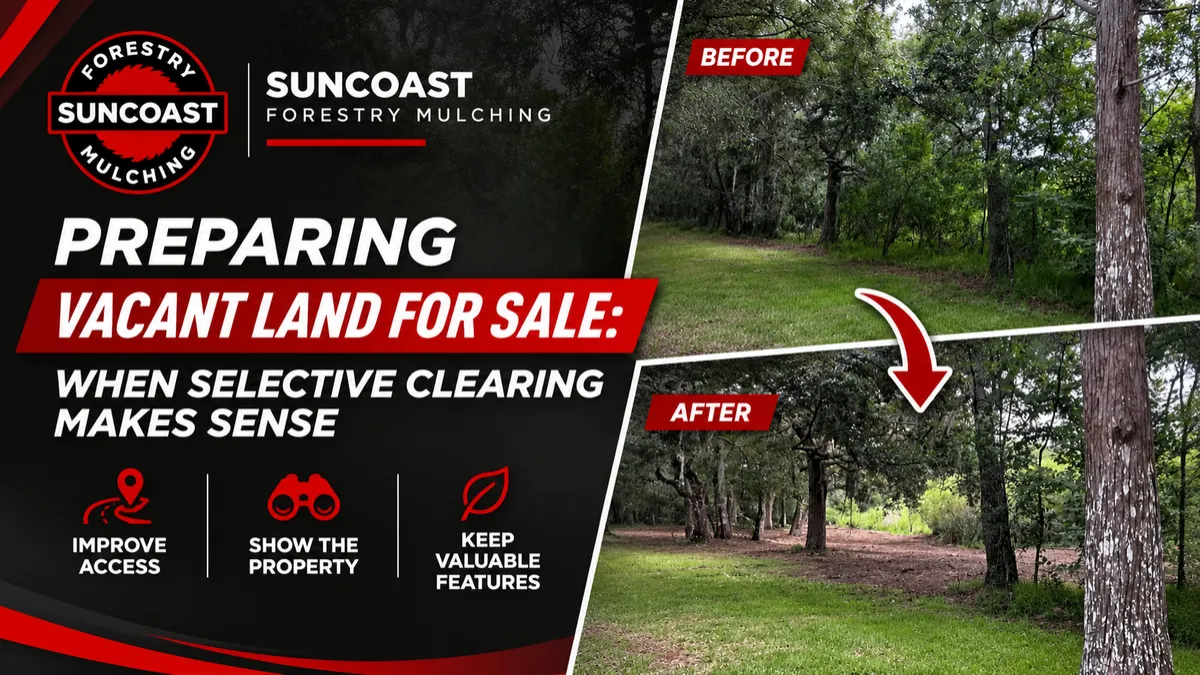
Preparing Vacant Land for Sale: When Selective Clearing Makes Sense
PREPARING VACANT LAND FOR SALE: WHEN SELECTIVE CLEARING MAKES SENSE
A wooded parcel can have useful features that are difficult to see from the road. Dense palmettos, brush and overgrown entrances can make it difficult for buyers to walk a property and understand its layout. But that does not mean the entire parcel needs clearing.
For real estate agents and landowners, the better starting question is: Which improvements, if any, would make the property easier to access, evaluate and present—and what would those improvements cost?
START WITH ACCESS
An approved, accessible entrance can make the first property visit more practical. On larger parcels, a carefully chosen walking trail may help visitors reach interior areas. Where an agent or owner already has a clearing plan, a contractor can simply price and execute that scope. Where the best approach is uncertain, a few selective options can be compared before work begins. Entrance improvements involving roads, drainage ditches or culverts may require separate authorization or construction work.
SHOW THE PROPERTY WITHOUT CLEARING IT ALL
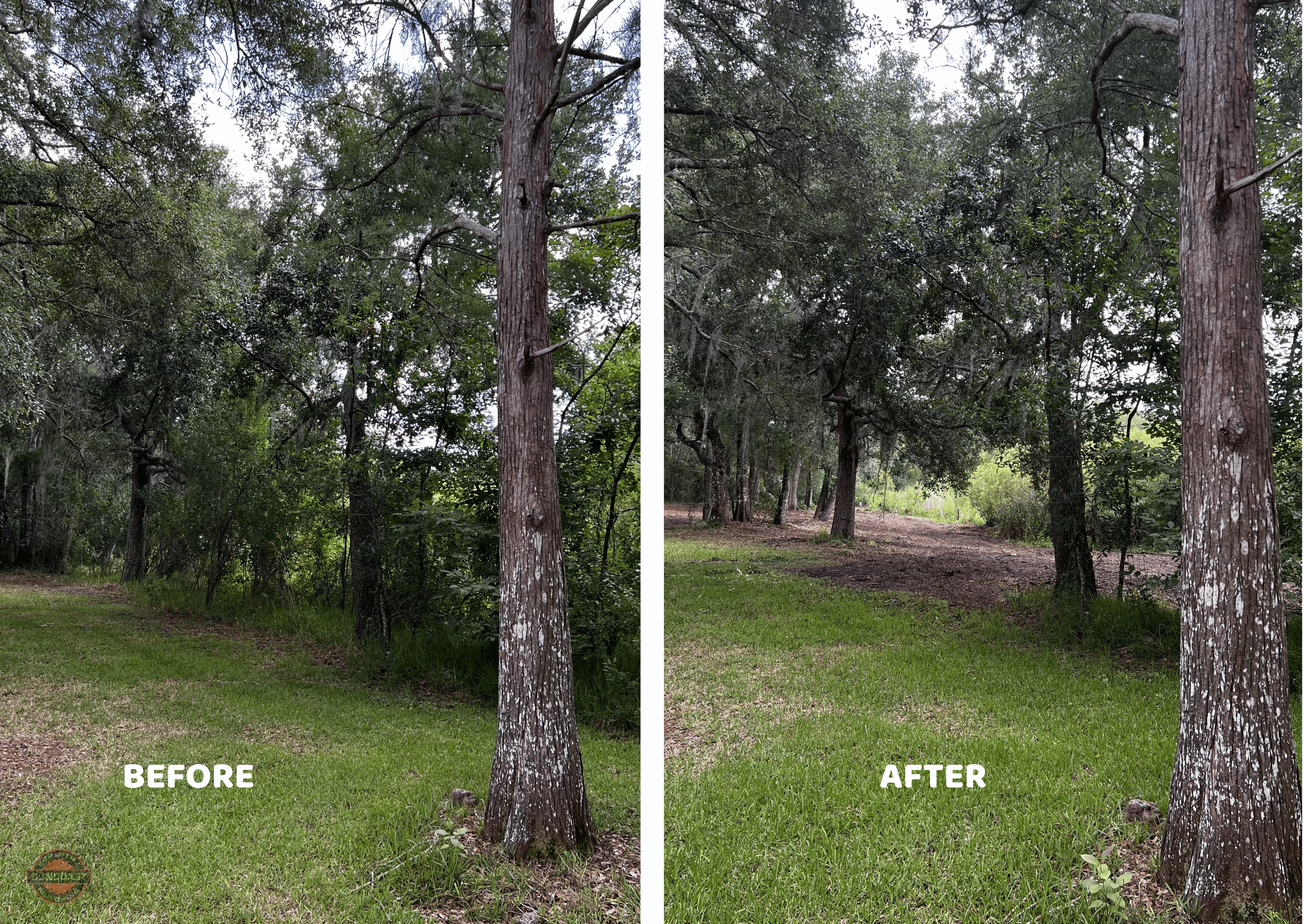
Selective clearing may focus on an entrance, designated trails, overgrown pockets or fence-line access. Mature trees and natural buffers can remain. Clearing a defined area can be less extensive than clearing the whole parcel, although actual cost depends on density, terrain, access and equipment requirements. The objective should be the owner's intended use and budget, not an automatic assumption that more clearing is better.
KNOW WHAT FORESTRY MULCHING DOES
Forestry mulching uses specialized equipment to cut and process suitable vegetation on site. It can be useful for brush, palmettos and woody growth within equipment limitations. It does not automatically remove stumps and roots, grade the land or create a construction-ready pad. Vegetation may regrow. University of Florida IFAS guidance explains that mechanical removal can require follow-up management, particularly where invasive plants are present.
BE CAREFUL WITH PROPERTY LINES AND RESTRICTIONS
Aerial maps are planning tools, not boundary surveys. Before clearing close to a line, confirm the work limits and access authorization. Wetlands, protected trees, easements, drainage features and county ordinances may constrain clearing. Florida environmental resource permitting rules govern certain activities affecting wetlands, surface waters and water flows. The owner should confirm applicable requirements before regulated work begins. A contractor's preliminary clearing plan is not an engineering design, wetland delineation, legal survey or permit approval.
THREE WAYS TO SCOPE A PROJECT
Essential Access: Approved entrance and a limited route into the property.
Selective Improvement: Add specific trails, overgrown areas or perimeter access.
Expanded Clearing: Additional areas requested by the owner for a defined purpose.
These are examples, not standard prices. A written estimate should specify dimensions, vegetation, exclusions, site assumptions and any work requiring separate approvals.
A PRACTICAL PARTNER FOR LAND AGENTS
Suncoast Forestry Mulching works with landowners and real estate professionals in Pasco, Hernando and Citrus counties. If an agent or owner already knows what needs clearing, we can quote that plan. If they would like options, we offer a complimentary preliminary one-page Property Improvement Plan for qualifying local properties, with proposed clearing areas and estimated costs.
For commissioned clearing projects, before-and-after ground photographs and, where available and legally feasible, aerial imagery can be arranged for listing use with appropriate permissions. Deliverables are agreed upon before work starts.
Have a specific wooded or overgrown property in mind? Contact Suncoast Forestry Mulching for a clearing estimate.